The short version: A surprising amount of seafood travels through several countries before it reaches your plate. Fish may be raised or caught in one country, processed in another, packaged somewhere else, and then shipped again for sale.
That does not automatically make imported seafood bad.
But the longer the supply chain, the harder it can be to know exactly what you are eating, where it came from, and who produced it.
Fish can travel a long way before you eat it
Seafood is one of the most internationally traded foods in the world.
A fish might be:
- Raised or caught in one country
- Shipped to another country for processing
- Sent somewhere else for packaging
- Then exported again before reaching a grocery store or restaurant in Canada
That means your fish can travel thousands of kilometres and pass through several businesses before it ever reaches your plate.
Sometimes there are good reasons for that. Different countries specialize in different parts of seafood production and processing.
But every extra step adds distance between the person eating the fish and the person who actually raised or caught it.
The bigger issue is traceability
The distance itself is not really the problem.
The bigger question is how easy it is to trace the fish back to its source.
When seafood changes hands several times, there are more opportunities for information to become unclear, incomplete, or incorrect.
That can include information about:
- The species
- The country of origin
- Whether it was farmed or wild
- Where it was processed
- Whether it was previously frozen
- How it was raised or caught
- Any sustainability claims attached to it
That is one reason seafood traceability matters so much.
Seafood mislabelling does happen
Seafood mislabelling has been documented in Canada. See our article: ‘Nearly half of fish could be mislabeled in Canada — here’s why that matters’
Testing has found cases where one species was sold as another, cheaper fish was substituted for more expensive fish, or farmed fish was sold as wild.
Not every mistake is deliberate fraud.
Sometimes incorrect information gets passed along somewhere in a long supply chain.
Either way, the end result is the same: the person buying the fish may not actually know what they are getting.
“Fresh” can be more complicated than it sounds
People often see the word fresh and assume the fish went almost directly from the water to the seafood counter.
That is not always how the seafood supply chain works.
Fish needs to stay very cold to protect quality and food safety. Depending on the product and how far it travels, seafood may spend a long time on ice or held very close to freezing temperatures before it reaches the consumer.
And frozen fish is not automatically lower quality.
Fish that is frozen quickly after harvest can maintain excellent quality.
The important thing is understanding what you are buying and how it was handled.
Why shorter supply chains matter
A shorter supply chain does not automatically make seafood better.
But it can make the story behind your food much easier to understand.
When there are fewer steps between the water and your plate, it becomes easier to answer some pretty basic questions:
- Who raised or caught this fish?
- Where did it come from?
- Where was it processed?
- How was it handled?
- Who can I ask if I have questions?
The fewer handoffs there are, the easier those questions usually are to answer.
What this looks like at Springhills
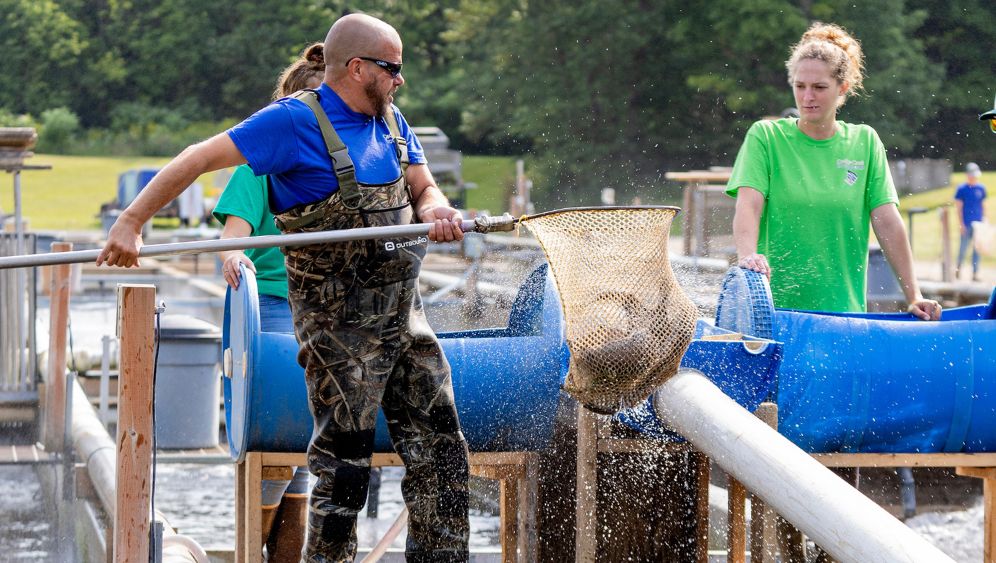
At Springhills Fish, we raise trout, Arctic char, and coho salmon here in Ontario.
We also process fish ourselves and sell through our home delivery program, independent stores, and grocery retailers.
That means there can be very few steps between the people raising the fish and the people eating it.
And if you have a question about how the fish was raised, where it came from, or how it was handled, you can ask us.
We are the fish farmers.
What should you ask when buying seafood?
If you want to better understand where your seafood comes from, ask a few simple questions:
- Is it eco-certified? This is the most important question, see our article: ‘Why you should always ask if your fish is eco-certified’
- What species is it?
- Where was it processed?
- Was it previously frozen?
- Do you know who produced it?
A retailer or restaurant may not know every answer.
But the answers they can give you tell you a lot about how traceable their seafood is.
Local seafood is really about knowing your food
Imported seafood is not automatically bad.
There are excellent fish farmers and fisheries all over the world.
For us, the bigger issue is transparency.
The shorter and clearer the supply chain, the easier it is to understand what you are eating and where it came from.
We might be a little biased, but we think one of the best seafood labels is pretty simple: Know who raised or caught your fish.
Frequently Asked Questions
Why does fish travel so far?
Seafood is traded globally. Fish may be raised or caught in one country, processed in another, and then shipped again before being sold in Canada.
Why are seafood supply chains so long?
Different countries often specialize in fishing, fish farming, processing, packaging, or distribution. That can create long international supply chains before seafood reaches the consumer.
Why does seafood traceability matter?
Traceability helps confirm what species a fish is, where it came from, whether it was farmed or wild, and who handled it before it reached the consumer.
Is seafood mislabelled in Canada?
Yes. Canadian studies have found cases of seafood being sold under the wrong species name or with incorrect information about how or where it was produced. See our article: ‘Nearly half of fish could be mislabeled in Canada — here’s why that matters’
Does fresh fish mean it has never been frozen?
Not necessarily. Seafood handling varies depending on the product and supply chain. If it matters to you, ask whether the fish has previously been frozen.
Is frozen fish lower quality?
No. Fish that is frozen quickly and stored properly can maintain excellent quality, and be even better quality if frozen immediately after harvest like we do at Springhills.
Where does Springhills Fish come from?
Springhills raises trout, Arctic char, and coho salmon in Ontario and processes fish through its own operation before selling through home delivery, independent retailers, and grocery stores.
Related
Items
Is Trout Salmon? A Guide to Rainbow Trout, Steelhead and Different Types of Salmon
Why you should always ask if your fish is eco-certified