Is Trout Salmon? A Guide to Rainbow Trout, Steelhead and Different Types of Salmon
Quick answer: Is trout salmon?
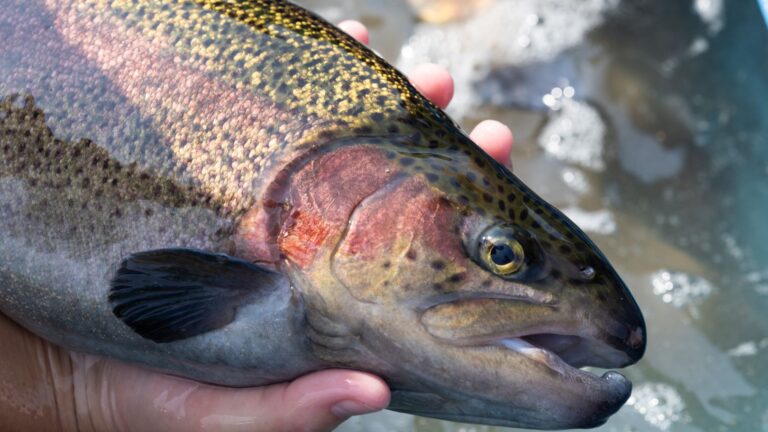
No. Rainbow trout is not a salmon species, though both belong to the Salmonidae family and are close relatives. Large rainbow trout is commonly sold as steelhead or ‘steelhead salmon’, so fish labelled salmon at the grocery store may actually be trout.
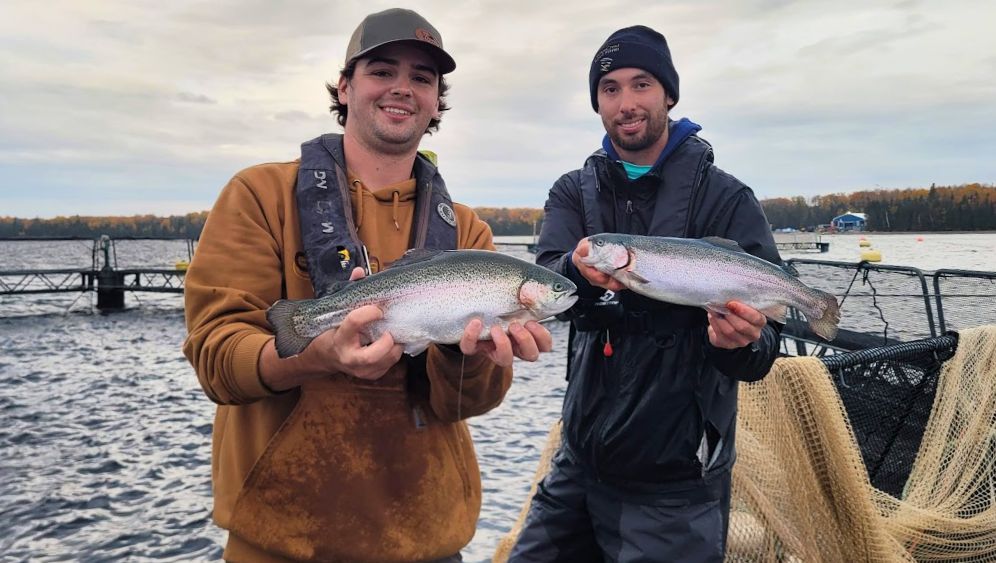
Springhills Fish raises rainbow trout, steelhead and coho salmon on our farms in Ontario, so we get this question a lot.
What is rainbow trout?
Rainbow trout belongs to the salmonidae family, the same biological family as salmon.
That close relationship explains why large rainbow trout can look surprisingly similar to salmon once they reach your plate. Both can have pink or red flesh, firm fillets and healthy omega-3 fats.
Rainbow trout has not always had the same premium reputation as salmon.
Historically, trout was often harvested at a much smaller size and sold as an affordable, pan-sized fish. That helped establish trout as more of an everyday meal than a premium seafood option.
Over time, farmers began raising rainbow trout to larger sizes.
These larger fish produce thick fillets with pink or red flesh, a firm texture and a rich flavour that is very similar to salmon.
What is steelhead?
Steelhead is a larger rainbow trout.
Traditionally, the name steelhead refers to rainbow trout that migrate between freshwater and the ocean.
Today, the term is also commonly used in the seafood market for large rainbow trout fillets.
That can create some confusion because steelhead may look and taste very similar to salmon, even though it is still rainbow trout. Also it can legally be called “steelhead salmon” too.
What is Atlantic salmon?
Atlantic salmon is the species most people are likely picturing when they think of the large salmon fillets found at grocery stores.
It is farmed extensively around the world and is one of the most widely available salmon species.
Atlantic salmon generally has orange-pink flesh, a rich flavour and a relatively high fat content. Its large size also means it produces substantial fillets and portions.
What is coho salmon?
Coho is one of the Pacific salmon species.
It typically produces somewhat smaller fillets than Atlantic salmon and is known for its red-orange flesh, firm texture and rich flavour.
Coho is also one of the salmon species we raise at Springhills.
Farm-raised coho offers an alternative to the Atlantic salmon that dominates many seafood counters while still providing the flavour and texture people associate with salmon.
What is Chinook salmon?
Chinook is also known as king salmon. It is the largest species of Pacific salmon and is highly valued by both anglers and seafood consumers.
Chinook tends to have a rich flavour and relatively high fat content. Its flavour can be more pronounced than some other salmon species. (That is a fancy way of saying it has a fishier taste, unlike the mild rainbow trout or Atlantic salmon.)
What is sockeye salmon?
Sockeye is well known for its distinctive deep-red flesh.
Most sockeye sold in Canada is wild-caught, and fresh sockeye has a relatively short seasonal window.
Frozen sockeye makes it available throughout more of the year, but fresh sockeye is more seasonal than commonly farmed species.
Sockeye generally has a stronger, more distinctive flavour than Atlantic salmon, coho or rainbow trout.
What is pink salmon?
Pink salmon is the smallest and most abundant of the Pacific salmon species.
Its relatively mild flavour and large wild harvest make it particularly well suited to canning and other processed products.
As a result, pink salmon is commonly found in canned salmon sold in grocery stores.
What is chum salmon?
Chum is another species of Pacific salmon.
It is generally leaner than Atlantic, Chinook or coho salmon, which can make it less forgiving to cook if it becomes overdone.
Chum is commonly used for smoking and other processed salmon products. Its roe is also highly valued in some seafood markets.
Why do salmon and trout look so similar?
Salmon and trout can look similar because they are closely related.
They belong to the same biological family and share many characteristics, including similar body shape, flesh texture and nutritional qualities.
Their flesh colour can range from pale pink to deep red depending on species, diet and how the fish is raised.
That is why a large rainbow trout fillet can sometimes be difficult to distinguish from salmon at a glance.
Why are farmed salmon and trout so consistent?
Rainbow trout, Atlantic salmon and coho salmon are all commonly farmed.
Farming allows producers to carefully manage factors such as:
- feed
- fish health
- water quality
- harvest size
- handling
- freshness
It also means these fish are not limited to a short wild fishing season.
For consumers, this often results in consistent quality, reliable availability and predictable flavour and texture throughout the year.
Which salmon or trout should you choose?
There is no single best choice. The right fish depends on the flavour and texture you prefer.
If you like a mild, rich and versatile fish, rainbow trout, Atlantic salmon and coho are all good options. They are often farmed, which means there is a lot of consistency and you’re guaranteed to get what you’re looking for.
If you prefer a deeper colour and stronger flavour, sockeye may be a better fit. Chinook offers a particularly rich eating experience, while pink and chum salmon are frequently used in canned, smoked or other prepared products. But these are all wild fish, so quality and consistency are more varied.
If you usually reach for salmon, large rainbow trout is also worth trying. Its flavour, colour and texture may be much closer to your favourite salmon than you expect.
Frequently asked questions
Is rainbow trout a type of salmon?
No. Rainbow trout is not a salmon species.
However, rainbow trout and salmon belong to the same biological family, salmonidae, which is why they can look, taste and cook very similarly. And rainbow trout is sometimes sold under the name “steelhead salmon”.
Is steelhead salmon or trout?
Steelhead is trout.
More specifically, steelhead is rainbow trout. Traditionally, the term refers to rainbow trout that migrate between freshwater and the Great Lakes or the ocean. But today, steelhead just refers to a larger rainbow trout fillet.
Is steelhead the same as rainbow trout?
Yes. Steelhead and rainbow trout are the same species.
The name steelhead has traditionally been used for rainbow trout with a migratory life cycle, although it is also commonly used in the seafood market for large rainbow trout.
Why is salmon orange or red?
The colour comes largely from carotenoid pigments, particularly astaxanthin, in the fish’s diet.
Wild salmon obtain these pigments from the organisms they eat. Farmed salmon and trout receive them through nutritionally formulated feed. Find out more in our article “Are farmed fish dyed orange”
What is the most common salmon at grocery stores?
In Canada, the large fresh salmon fillets most commonly seen at grocery stores are generally farmed Atlantic salmon.
Can salmon and trout be cooked the same way?
Often, yes. Large rainbow trout, Atlantic salmon and coho can usually be prepared using many of the same cooking methods. Their fat content and fillet thickness vary, so cooking times may need to be adjusted slightly.
The bottom line
Rainbow trout is not salmon, but the two are very closely related.
Atlantic, coho, Chinook, sockeye, pink and chum are all distinct salmon species. Rainbow trout belongs to the same Salmonidae family and can look and taste remarkably similar, especially when raised to a larger size.
Understanding the species behind the name can make it easier to choose the fish that best suits your taste, recipe and budget.
Related
Items

Why Most Fish Travels Farther Than You Think

Why you should always ask if your fish is eco-certified