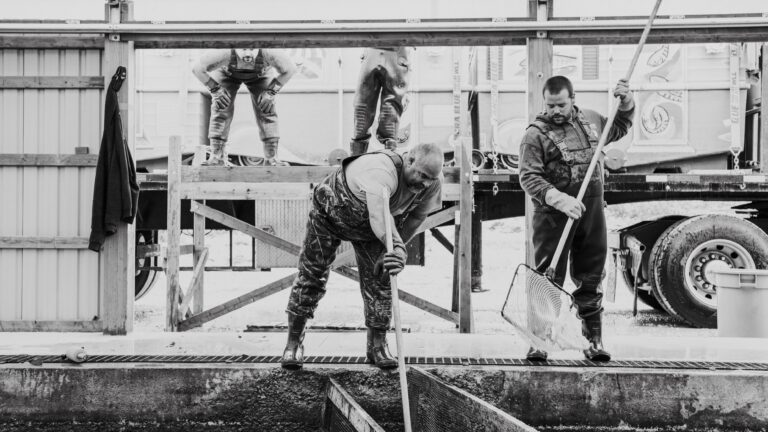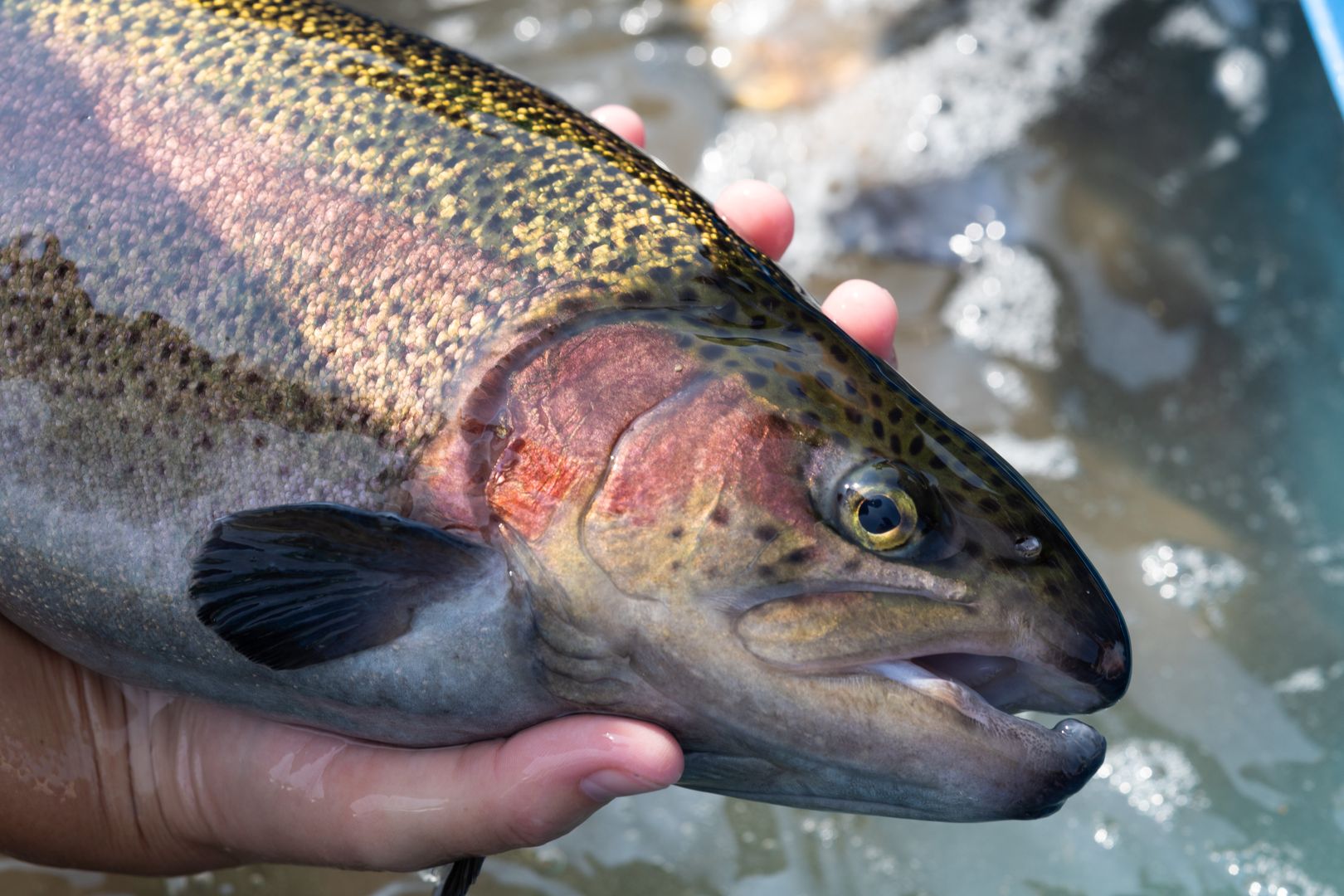
For our family, ethical fish farming is not a marketing trend. It has been our way of life for over 50 years.
We are second-generation fish farmers, and our values guide every part of our work, from how we raise our trout, char and salmon to how we choose the partners who help us offer more variety to our customers.
Below is what sets a Springhills fish apart and why you can feel confident that your seafood is raised or sourced with integrity.
A Canadian farm with decades of experience
Our parents started fish farming more than five decades ago. Their approach was simple: keep the water clean, treat the animals well and care for the environment we depend on. Today, we continue that work with a modern and science-based approach that still honours the principles we grew up with.
Over the last ten years, we have expanded the business with new farm sites, new technologies, and new species with the goal of protecting, and even enhancing, our local ecosystems along the way. We want to ensure that we can be farming for generations to come. Read our family’s story.
Animal welfare is at the heart of our farming
Healthy fish grow best when they are comfortable, well fed and handled gently. Our team focuses on welfare every day through constant monitoring, careful feeding routines and humane handling at every stage of production. We raise our fish in clean freshwater with strong flow, good oxygen and predictable temperatures that keep them calm and thriving.
Visitors often ask about our systems during farm tours, and we are always happy to explain how we maintain water quality, monitor fish behaviour and design environments that allow fish to swim naturally. Transparency is important to us, which is why our farm remains open to the public. We want people to see what ethical aquaculture looks like in action.
One of our owners, Arlen Taylor, served on the national committee that wrote the first animal welfare code of practice for farmed trout and salmon in 2021. This work helped set the foundation for fish welfare standards across Canada and shapes how we operate our farms today.
Third-party eco-certifications you can trust
Fish farms operate in the public eye because we work with a shared resource: water. That visibility has encouraged our industry to be increasingly accountable and transparent, and it has pushed farms like ours to keep improving year after year.
One of the strongest ways to show that a fish farm is truly sustainable is through third-party eco-certifications such as Best Aquaculture Practices. These programs are voluntary, independently audited and designed to confirm that farms meet high standards for animal welfare, environmental care and responsible production.
Our farms were the first in central Canada to earn BAP certification. Auditors visit our sites every year to review water quality, feeding, fish health, waste management, habitat impact, staff training and more. BAP certification confirms that we follow strict protocols for environmental protection, humane handling, traceability and social responsibility.
Most of our fish are also recognized as sustainable choices through regional programs such as Ocean Wise and Seafood Watch. These reviews highlight farms and fisheries that demonstrate low environmental impact and responsible practices from start to finish.
Fish farming that can restore local fish habitats
Not only do we protect the environment, but emerging research shows that our farms can actually help restore it.
For more than twenty years, invasive zebra and quagga mussels have stripped Lake Huron and Georgian Bay of the tiny nutrients that form the base of the food web. With those nutrients gone, many wild fish populations have struggled to survive. Scientists at the University of Guelph have now shown, with statistical significance, that the trace nutrients released from our freshwater farms can help rebuild that lost food web and support healthier wild fish communities.
Our Indigenous partners have seen this firsthand. They have excitedly reported the return of species like chinook salmon in areas where they had not been spotted for fifteen years or more, which reinforces what the science is telling us and highlights the positive role well-managed freshwater farms can play in local ecosystems. Read more.
How we source other fish with the same standards
As demand for more variety has grown, we have partnered with other Canadian fish farmers and fishers to offer species beyond the ones we raise ourselves. We only work with people who share our commitment to welfare, environmental care and responsible harvest. Before any product reaches our customers, we speak directly with the farmers or fishers, ask detailed questions about their practices and review their sustainability measures.
If a partner cannot demonstrate the level of care we expect, we simply will not source from them. Our goal is to provide fish that meet the same high standard as the ones that come from our own farms.
Why choosing ethical and sustainable fish matters
When you buy a Springhills fish, you support a Canadian family that has dedicated nearly five decades to ethical animal care and environmentally responsible food production. You support verified sustainability standards, transparent practices and partners who meet the same high expectations we set for ourselves. Most of all, you support a way of farming that puts fish health and environmental care first.
More questions about our practices:
- What do our fish eat?
- Why Springhills farms can be good for the environment?
- Why don’t we offer organic fish? (Hint: eco-certifications are better!)
- Are wild fish better than farmed?
- Plus: Top five myths we bust constantly
Learn more about Springhills Fish delivery:
Related
Items
Why exercise is the new trend in fish farming
Are farmed trout very different than wild trout?