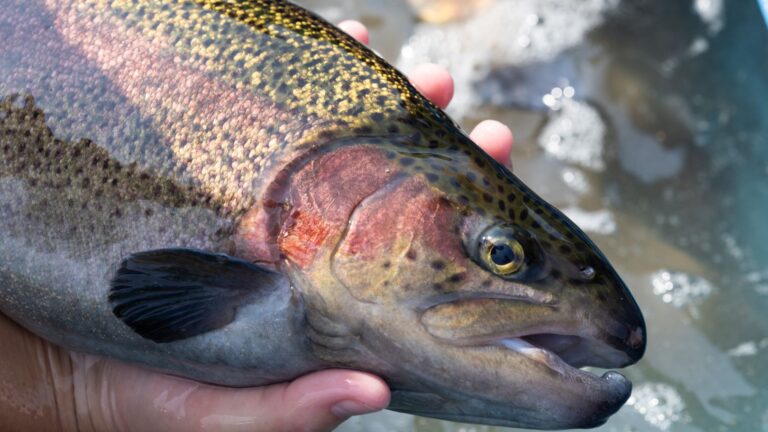
Fish may not get the sniffles, but they can still get sick.
Like people, pets and other farm animals, fish come into contact with bacteria and other tiny germs every day. Most of the time, their immune systems keep them healthy.
At our Ontario fish farms, caring for fish health is an important part of responsible fish farming. Healthy fish begin with clean water, good nutrition, enough space and careful daily attention.
What can make farmed fish sick?
Some fish diseases and bacteria occur naturally in Ontario waters. They may be present in the water without causing illness.
Fish are more likely to become sick when they are stressed or when there are too many germs for their bodies to fight.
Common causes of stress include:
- Water that becomes too warm
- Poor water quality
- Overcrowding
- Rough or frequent handling
- Sudden changes in their environment
Stress can weaken a fish’s natural defences and make it harder to fight illness. This is why good water management and low-stress handling are so important in Canadian aquaculture.
How can fish farmers tell when a fish is sick?
Fish cannot cough, sniffle or tell us they are not feeling well. Instead, fish farmers watch for changes in their appearance, appetite and behaviour.
A sick fish may:
- Become tired or less active
- Swim slowly, strangely or away from the group
- Develop white spots
- Have sore or inflamed gills
- Jump or rub against surfaces because it feels itchy
- Eat less or stop eating
A change in appetite is often one of the first signs that something may be wrong.
Feeding time is therefore about more than simply providing food. It also gives our team an opportunity to observe every group closely and notice small changes before they become larger problems.
How we help prevent illness on our Ontario fish farms
Preventing illness is an important part of responsible fish farming.
Our team works to reduce stress, maintain good water quality and prevent germs from spreading between groups. Some of the steps we take include:
- Limiting handling during warm weather
- Cleaning and sanitizing tanks between groups
- Moving fish before tanks become crowded
- Keeping equipment and water separate between sick and healthy groups
- Vaccinating fish against certain diseases (just like most chickens, pigs, cows and other farm animals today)
- Monitoring water temperature and quality
- Observing every group several times each day
These practices help us raise healthy local fish while maintaining strong animal-care standards.
Why test results do not always mean fish are sick
Water can carry bacteria more easily than air. Because of this, bacteria may sometimes be detected in the water even when the fish appear healthy and show no signs of illness.
Laboratory testing is an important tool, but a test result does not always tell the entire story.
Fish farmers and aquatic animal-health professionals also consider:
- How the fish are swimming
- Whether they are eating normally
- The condition of their skin and gills
- Water temperature and water quality
- Recent handling or environmental stress
- Whether illness is spreading through the group
In other words, we look at the fish, their environment and the test results together.
What happens when farmed fish become sick?
Most fish on our farms remain healthy and never become seriously ill.
When illness does happen, many fish recover and continue growing. Sadly, some may not recover. That is one of the difficult realities of caring for any group of animals.
Our responsibility as fish farmers is to notice problems early, respond quickly and provide the best possible care.
Raising healthy local fish in Ontario
Aquaculture is the farming of fish, shellfish and aquatic plants. In Canada, fish farming helps produce a consistent supply of locally raised seafood while supporting rural communities, Canadian food production and jobs.
At Springhills Fish, we raise fish in Ontario using clean, oxygen-rich water and careful daily management. Every stage of production, from young fish to harvest, depends on good water quality, responsible handling and close observation.
Healthy water, clean tanks and attentive animal care give our fish the best chance to remain strong and healthy. They also help us provide Ontario families with responsibly raised Canadian fish.
Related
Items
Is Trout Salmon? A Guide to Rainbow Trout, Steelhead and Different Types of Salmon

Why you should always ask if your fish is eco-certified